
A complete look into our Honda Civic Type-R FK8 Stage 1 build. From intake and exhaust upgrades to cooling, ECU calibration and dyno results, this article explains the purpose behind each modification and what it takes to build a properly balanced FK8.
The Honda Civic Type-R, codenamed FK8, marked a major turning point for Honda.

After years of naturally aspirated Type-R models built around revs, simplicity and sharp response, Honda moved into a new era. The FK8 arrived with a 2.0-litre VTEC Turbo engine, more torque, more technology and a far more serious performance platform overall. It was a different direction, but one that worked. The car proved its worth the moment it set a 7:43.8 lap at the Nürburgring Nordschleife, becoming the fastest front-wheel-drive production car of its time, until the newer FL5 eventually took over that crown.
That alone tells you what kind of base the FK8 really is.
But once you start working on one, you quickly realise something important. This is not an older Honda where you add a few bolt-ons, upload a map and call it a day. The FK8 is a much more integrated platform. It reacts very well to upgrades, but only when they are chosen in the right order and with the right purpose.
That was exactly the thinking behind this build.
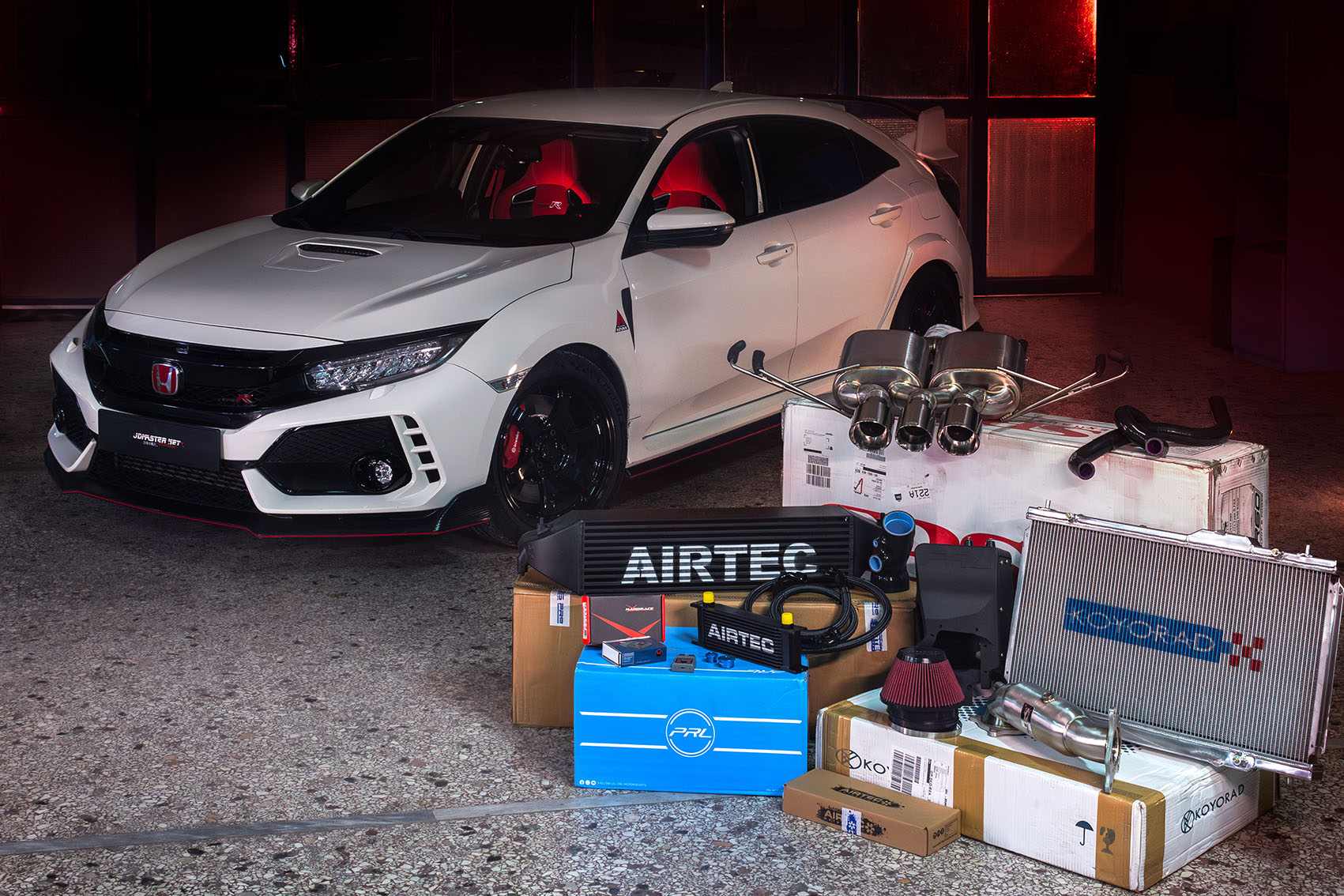
This particular FK8 belongs to one of our customers, and the entire project was carried out by us using products from selected suppliers. From the start, the goal was not simply to chase a dyno number. The idea was to put together a complete and properly balanced Stage 1 package, improving airflow, strengthening the cooling system and then calibrating everything correctly so the car could deliver more performance without sacrificing reliability.
Because on the FK8, one of the first things that starts to matter once you ask the car for more is heat.
The basics
One of the biggest mistakes when someones wants to step into the tune up on the FK8 is by starting from the wrong place. The engine power
The platform doesn’t luck of power.The K20C1 is already efficient, responsive and capable.
What limits it under real conditions is not the engine itself, but the environment it operates in.

Heat. Load. Flow.
Once you start pushing the civic on a mountain run or in a track circuit, you difenetly feel that FK8 does not struggle to make power.
The more you push it at a point, It struggles to maintain the power.
Under repeated load, especially in track conditions, intake temperatures rise, oil temperature increases and consistency drops.
This is where most “Stage 1 builds” fail.
They improve peak output.
But they don’t build stability.
Intake Upgrade
When people talk about intake upgrades, many still imagine an open cone filter and a louder turbo sound. On older Hondas, that may have been enough to satisfy the average enthusiast. On the FK8, things are not that simple.
For this build, we chose the PRL High Volume Intake System.
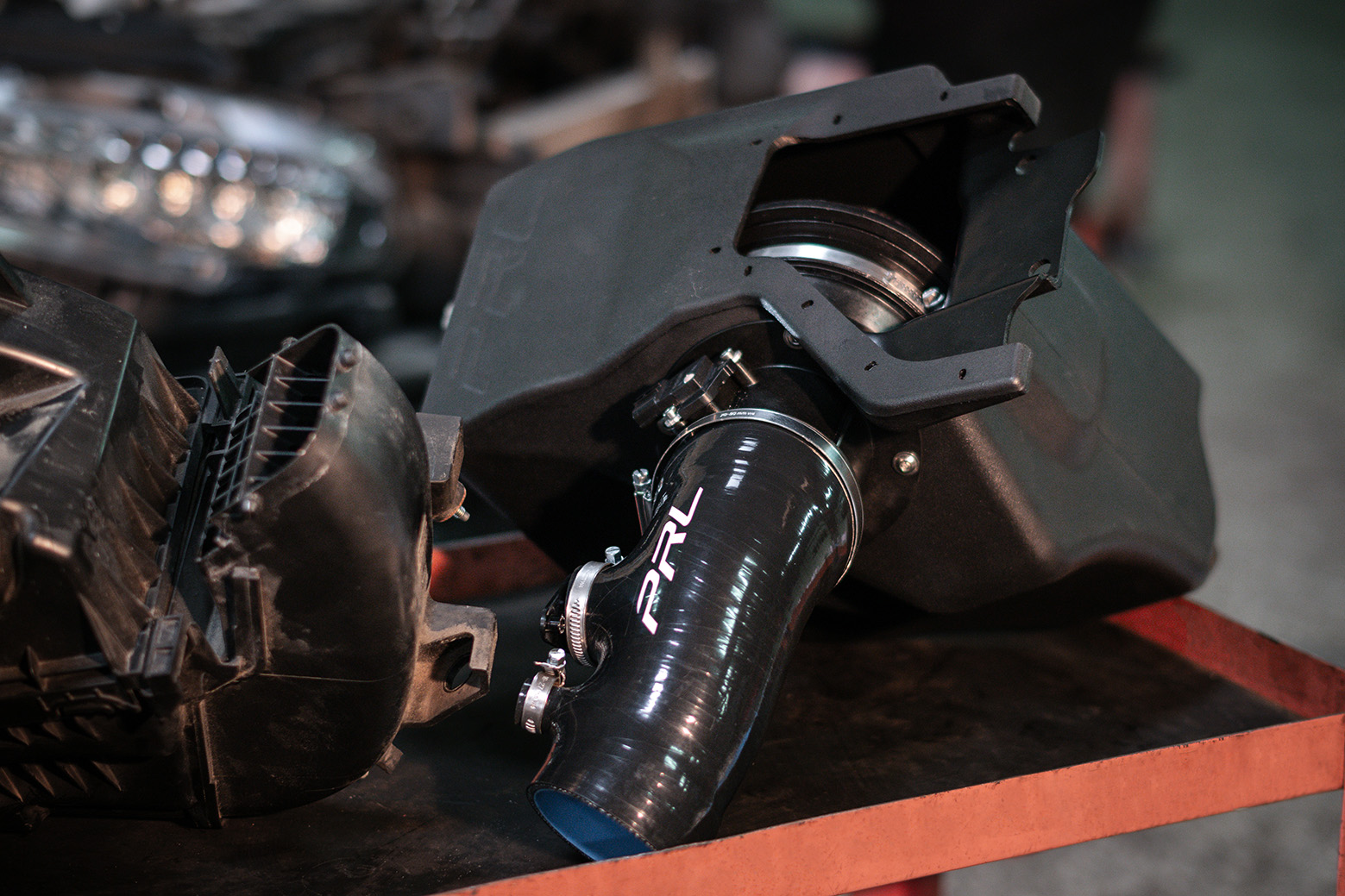
What makes this intake kit interesting is that it is not just a filter replacement. It is a complete air intake solution designed specifically around the FK8 platform. PRL uses a large 6-inch filter element, a properly developed intake path and an enclosed airbox concept, rather than simply exposing the filter to engine bay heat. That is an important difference.
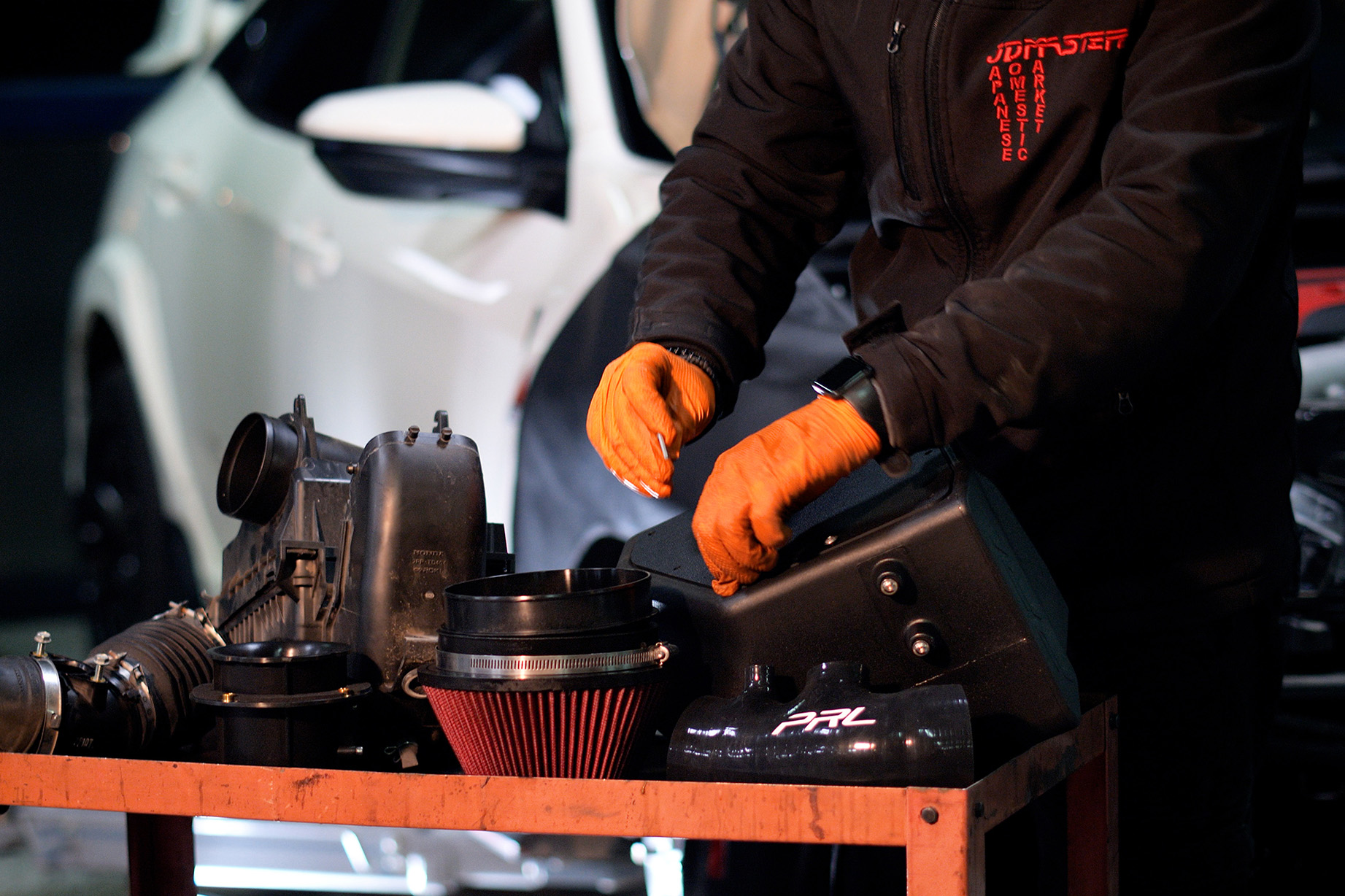
Instead of drawing in hot air from around the turbo area, the PRL system keeps the airflow path cleaner and more controlled, while at the same time reducing restriction compared to the factory setup. The result is not only more intake sound and better turbo response, but also a setup that suits a modern turbo Honda much better than a basic open filter conversion.

This is one of those parts that makes more sense the more you understand how the FK8 works. It is not there just for noise or looks. It is there to give the turbo a better airflow, while keeping intake temperatures under better control than many simpler aftermarket solutions.
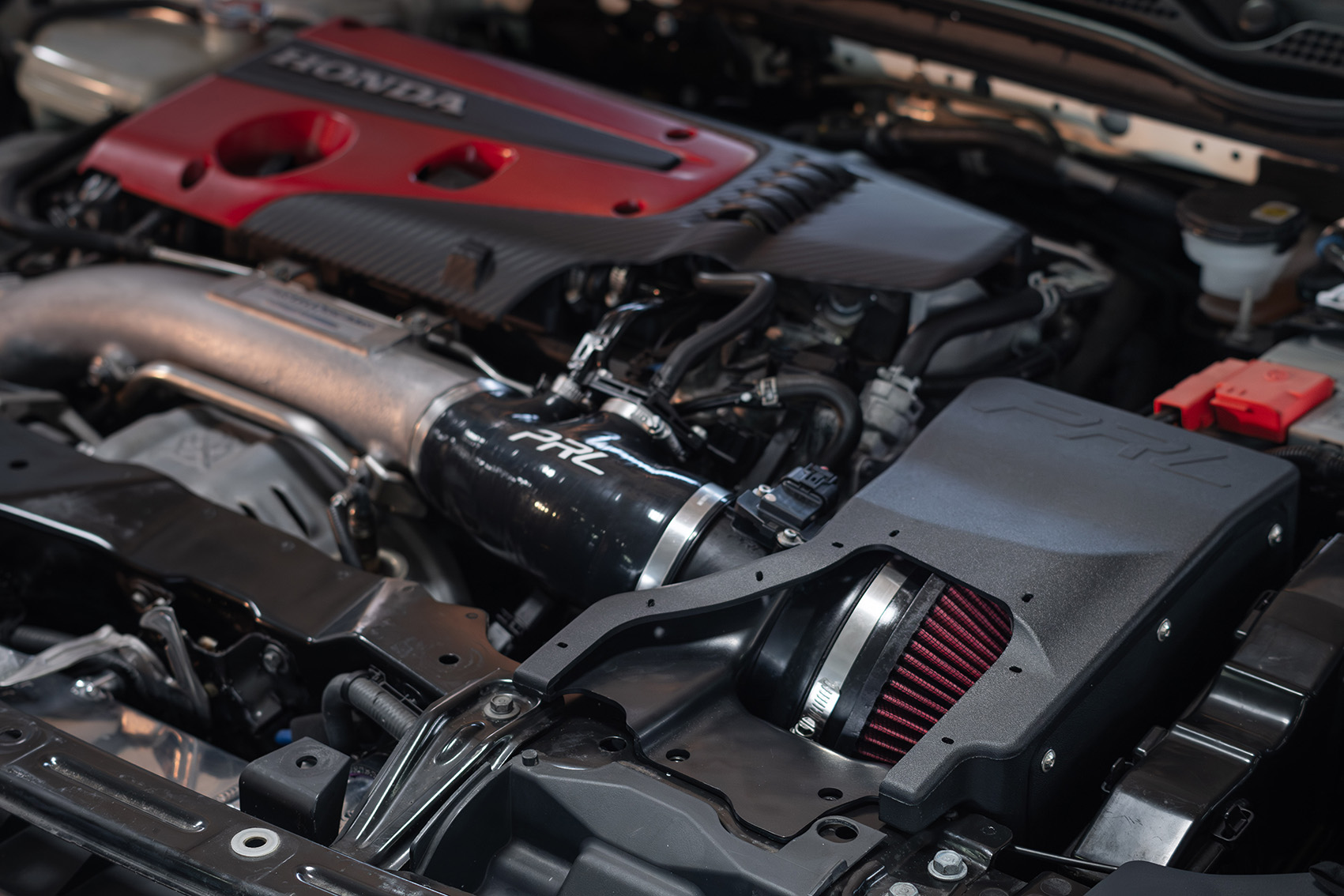
From the first drive, the difference in response was noticeable. The turbo feels more eager, the intake note becomes much more alive, and the overall engine bay still keeps a clean and properly finished OEM+ look, which is something we always appreciate on builds like this.
Exhaust Upgrades // Downpipe & Catback
Once the intake side is improved, the next step is to free up the exhaust side of the engine. Because in a turbocharged setup, airflow is not just about what goes in. It is equally about how efficiently everything can get out.
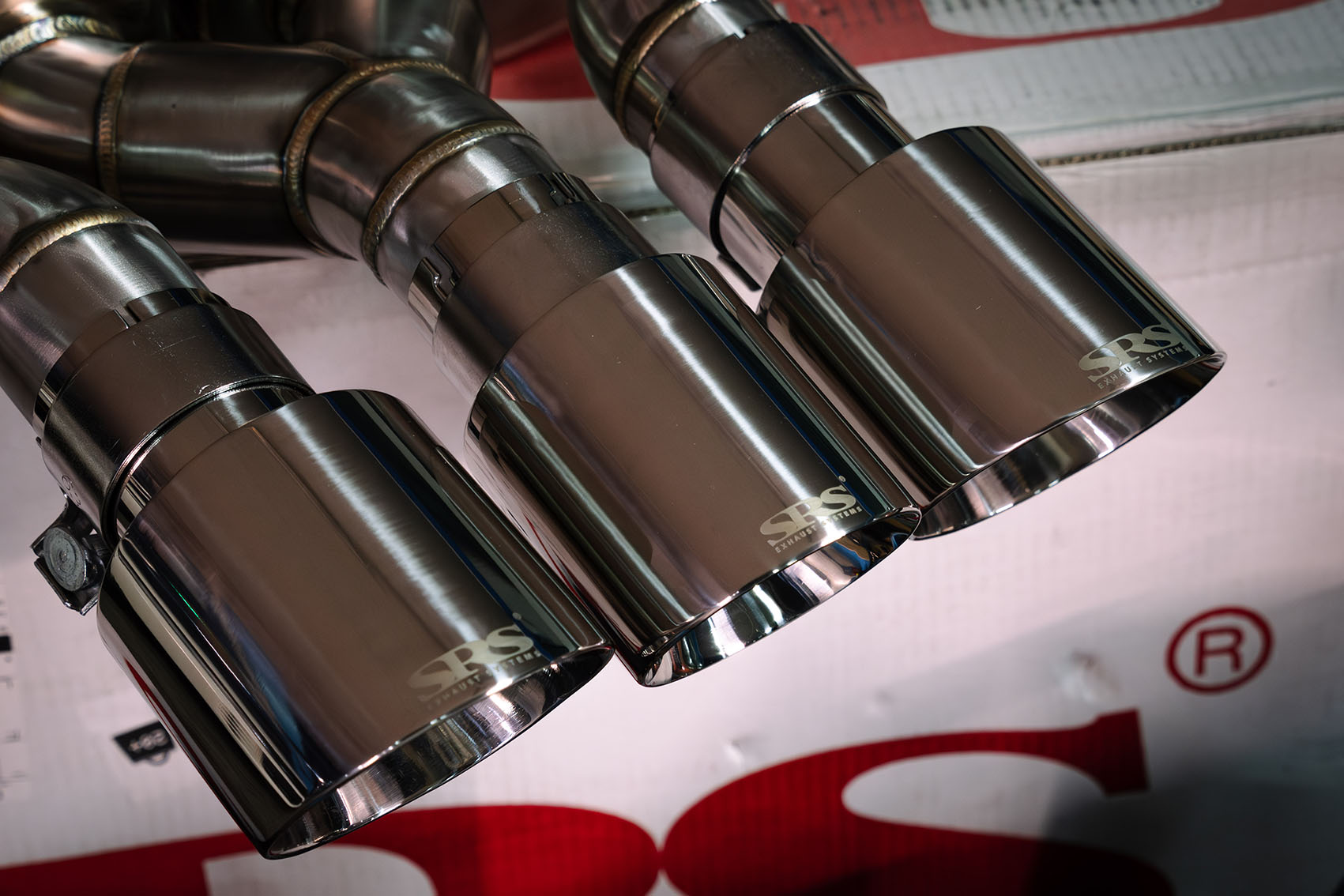
For this build, we used the SRS R60 catback exhaust system together with the matching SRS decat downpipe.
The catback itself is a very nice solution for the FK8 because it keeps the factory-style triple exit design, while improving flow and reducing overall weight compared to the OEM system. It is a full stainless steel setup, direct-fit, and it comes as a proper bolt-on system with all the necessary fitting hardware. That may sound simple on paper, but on newer platforms fitment quality matters a lot more than people think.

A good exhaust is not only about materials or sound. It is about how well it sits under the car, how well it clears the rear section, and how close it stays to factory-level fitment once everything is aligned correctly.

Sound-wise, the SRS system gives the FK8 the tone it should have had from factory. A deeper and more performance-oriented character, but still without becoming tiring to live with.
The bigger change though comes from the downpipe.
The factory catalytic section is one of the biggest restrictions in the FK8 exhaust path. Replacing it with the SRS decat downpipe helps reduce exhaust backpressure significantly, allowing the turbo to spool more freely and work with less resistance. On a turbocharged engine, that does not only help response. It also helps reduce thermal stress around the turbocharger and exhaust side of the engine, because gases can evacuate faster and more efficiently.

This is one of the reasons why a proper downpipe and catback combination changes the whole feel of the car even before tuning. The engine feels less held back, the turbo reacts quicker, and the whole setup begins to make much more sense once paired with the intake and the rest of the supporting hardware.

Of course, with parts like a decat downpipe, application depends on intended use and local regulations, but from a pure performance point of view, this is one of the key changes in the Stage 1 recipe.
Cooling // Where the Build Actually Happens
Working on the cooling section of an FK8 starts long before the actual parts go on the car.
Front bumper components, undertrays, plastics, ducting and mounting points all need to be removed carefully, and more importantly, with a clear plan for how everything is going to go back together. That is one of the biggest differences between a platform like the FK8 and the older EG or EK Civics we were used to working on for years.
Older Hondas were simpler. More mechanical. More direct.
The FK8 is a far more integrated car. Better in many ways, more capable without question, but also much less forgiving if you rush a job or ignore how Honda intended the front-end airflow path and body fitment to work.

The FK8 can make power, no problem. But once you start pushing the car harder, especially in warmer conditions or under repeated load, temperatures begin to play a much bigger role than many people expect. Intake temperatures rise, oil temperatures start climbing, coolant temperatures become more important, and suddenly you understand that making the car faster is only half the story.
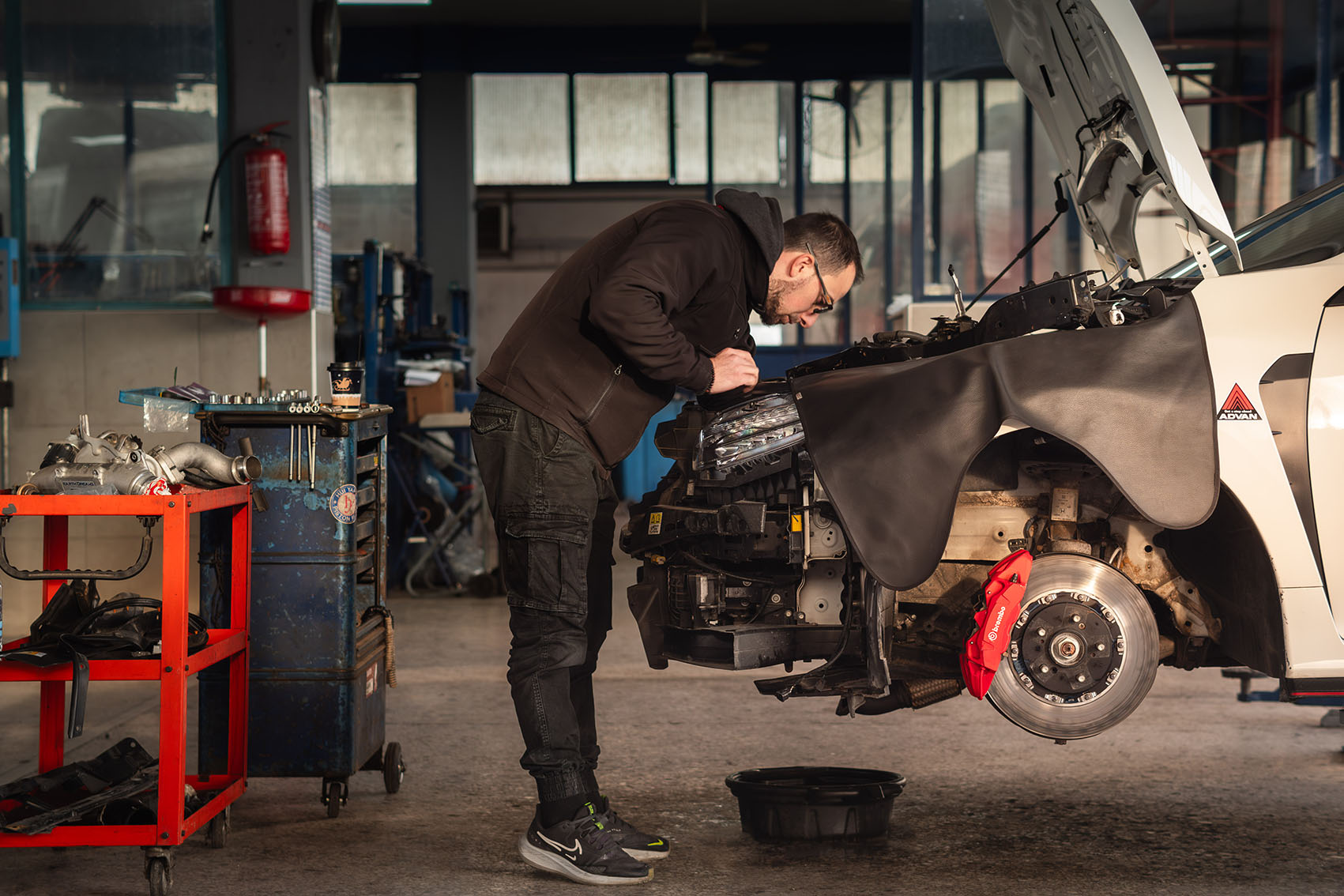
Keeping it consistent is the real job.
That is why the cooling section of this build was approached as a complete system, not as a single part upgrade.
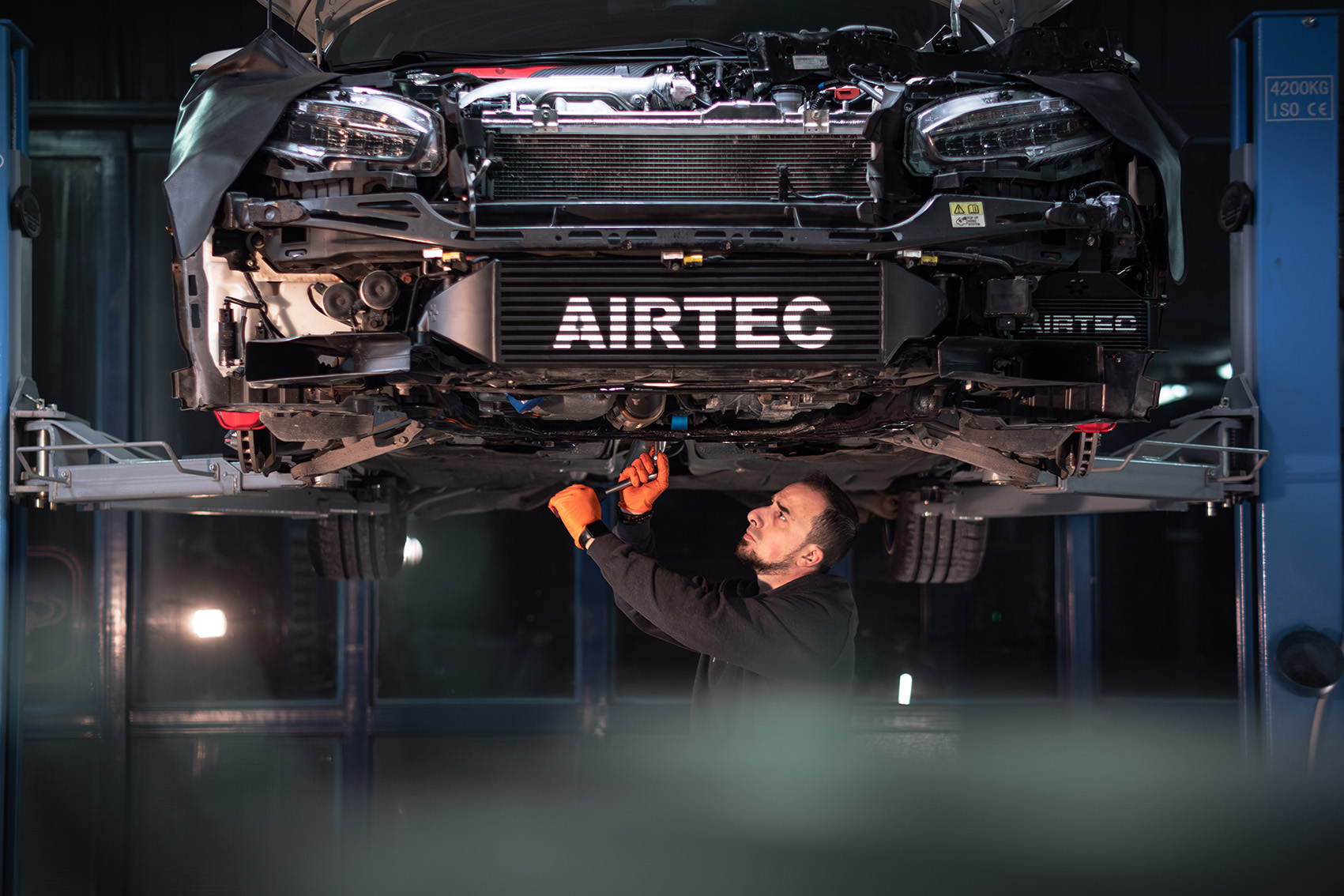
AIRTEC Intercooler
We started with the AIRTEC Motorsport intercooler kit, which is a major improvement over the factory intercooler.
According to AIRTEC, this unit offers a 140% increase in capacity over OEM, along with a noticeably larger front face area. That is a serious difference, not just a cosmetic one.

What that means in simple terms is more cooling potential for the compressed air coming from the turbo before it enters the engine. Lower intake temperatures help the engine stay more consistent, reduce the chance of heat soak, and make it easier for the ECU to maintain stable performance under pressure.
Another nice point with this kit is that it is designed to fit properly behind the original bumper without cutting or trimming, which is always appreciated on a modern chassis where good fitment and proper airflow path are important.

The next part of the thermal package was the AIRTEC oil cooler kit. This is a product that makes a lot of sense on an FK8 that is going to see real use, especially spirited road driving or track work.
The kit uses a 13-row external oil cooler, complete with a thermostatic sandwich plate, braided lines and all the required brackets and fittings. In practice, what this does is help keep oil temperature under control once the car is driven hard for more than a quick pull or two.

A lot of people underestimate the role of oil temperature in a turbo build. Oil does not only lubricate the engine. It also plays a big part in heat management. Once oil temperatures start rising too much, consistency disappears and the car becomes less confidence-inspiring the harder you push it.


This is exactly why an oil cooler is one of the smartest supporting mods on the FK8.
Koyorad Aluminium Radiator
The water cooling side of the build was upgraded with the Koyorad Aluminium Radiator.
This is another part that addresses the FK8 in the right way. Instead of trying to solve everything with one “miracle” part, it adds more cooling headroom where the factory setup can begin to struggle.

The Koyorad unit uses a 48mm core, which is around 50% thicker than stock, and features full aluminium construction with proper welded end tanks. In simple terms, it is a much more serious radiator than the OEM item, designed to dissipate more heat and do it more consistently. A truly bolt on unit, retaining all oem mounting points.


Once you start adding boost, more airflow and more overall demand on the engine, the cooling system needs to keep up with the new reality of the setup.
Acuity Reverse-Flow Silicone Hoses
To complete the cooling section, we added the Acuity reverse-flow silicone radiator hoses.
At first glance, some people may look at radiator hoses and think of them as a small detail. But on a modern platform, details like this are what separate a complete build from a half-finished one.

The Acuity hoses are not only stronger and more resistant to heat than the factory rubber hoses, but their reverse-flow design is also intended to improve the way coolant moves through the radiator.
Acuity’s own testing showed a measurable reduction in water temperatures in hot conditions, especially on cars already running supporting cooling upgrades.
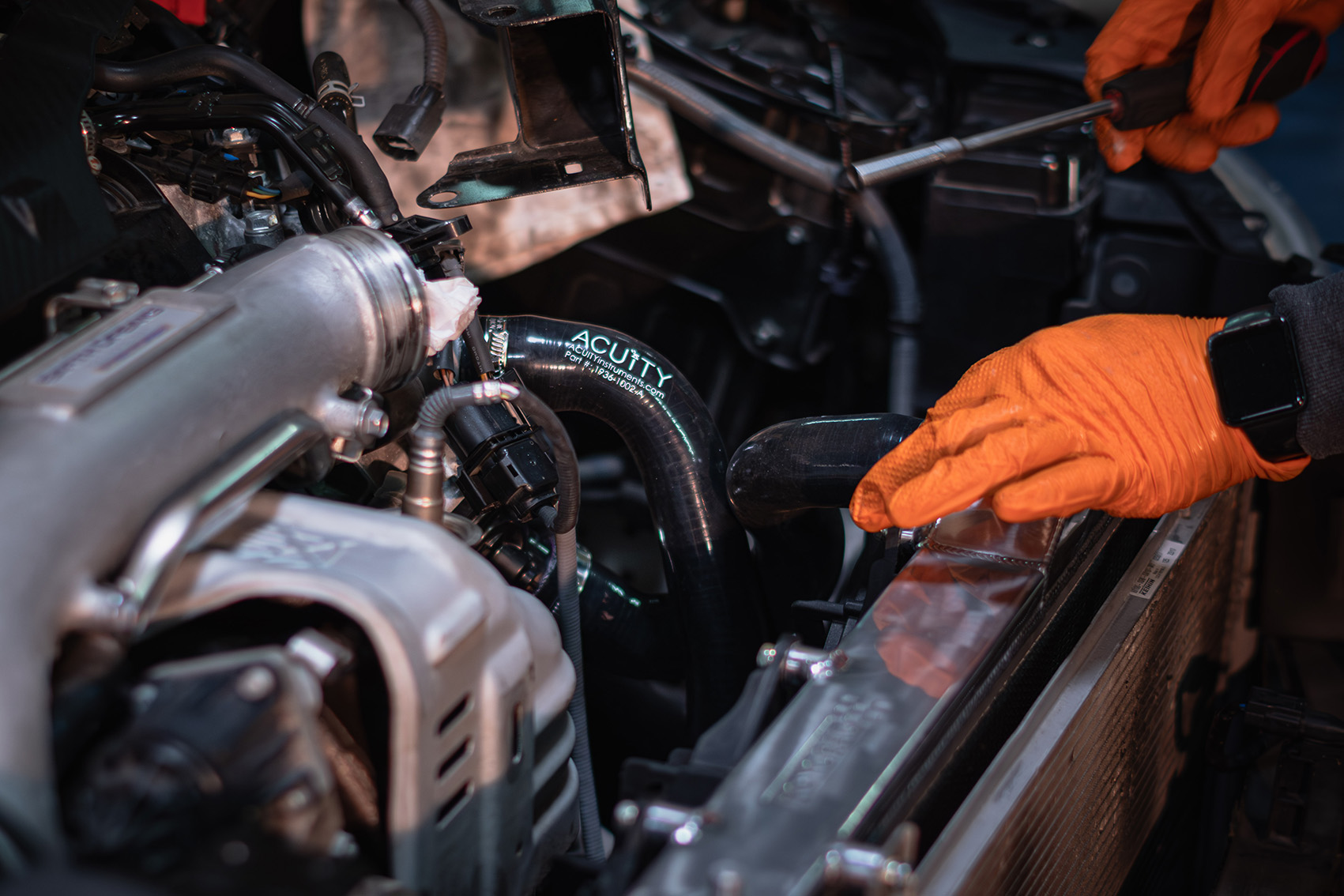
That is exactly why they made sense here.
On their own, they are not a magic power mod. But together with the radiator, intercooler and oil cooler, they become part of a complete thermal management package. And that is the point.

ECU Remapping & Dyno
After completing the intake, exhaust and cooling upgrades, the build reached its most critical stage. The calibration.
For this part of the process, we used the Hondata FlashPro and began with road testing, monitoring how the engine responded to the first mapping changes and making sure the car reacted properly before moving to the dyno.

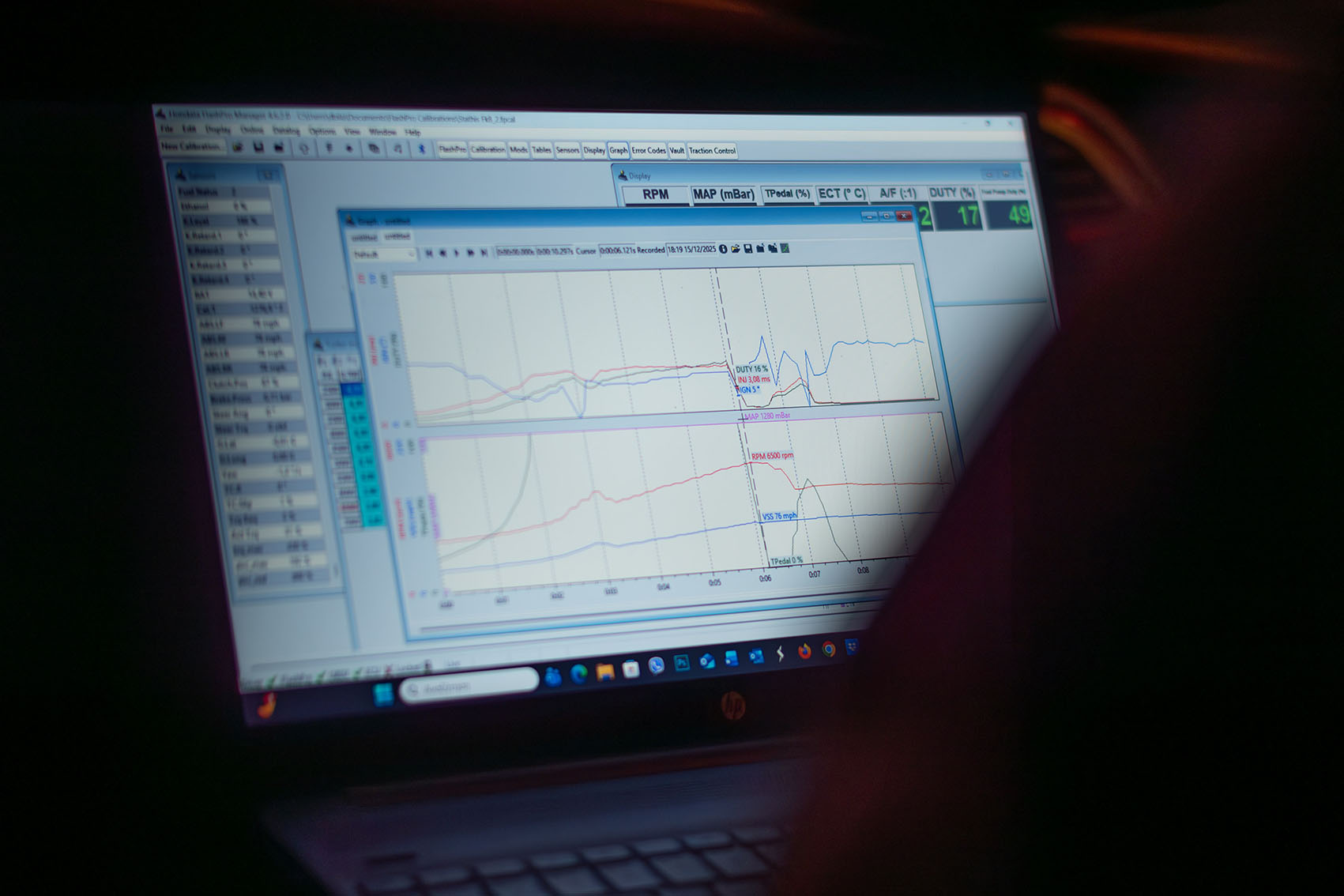
And this is where the FK8 reminds you once again that it is a very different car compared to older Honda platforms.
The Bosch ECU is far more complex, with a more advanced strategy for torque control, boost management and safety functions. That means the tuning process requires patience, especially when you are working through repeated reflashes and trying to refine the map without rushing the result.

But once the car had a solid base map and responded cleanly to the changes, a few final targeted adjustments were enough to bring the whole setup together.
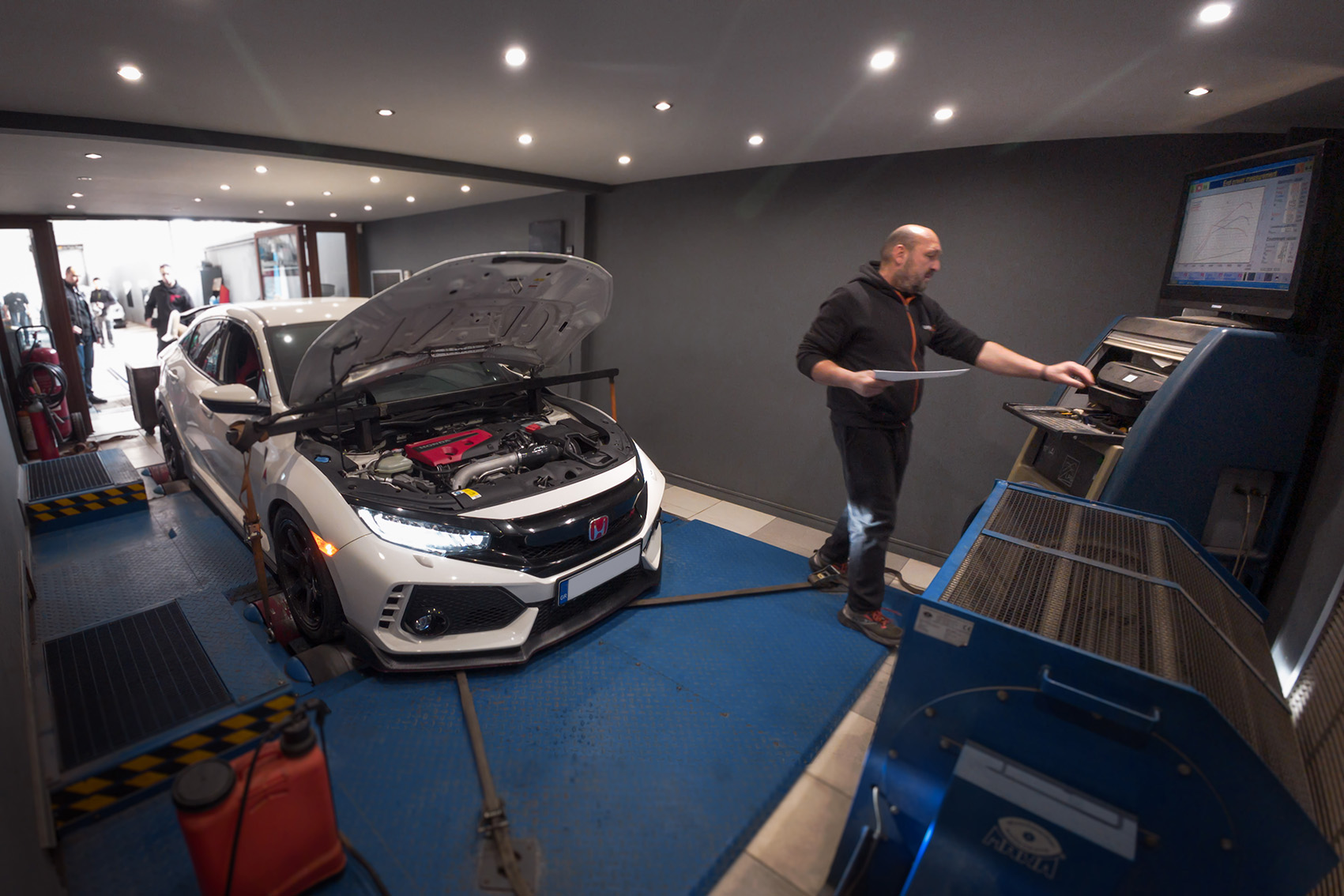
Final dyno result
- 420 HP
- 56.7 kgm / 556.4 Nm
- 1.6 – 1.7 bar peak boost
For a Stage 1 FK8, this is a very serious result.
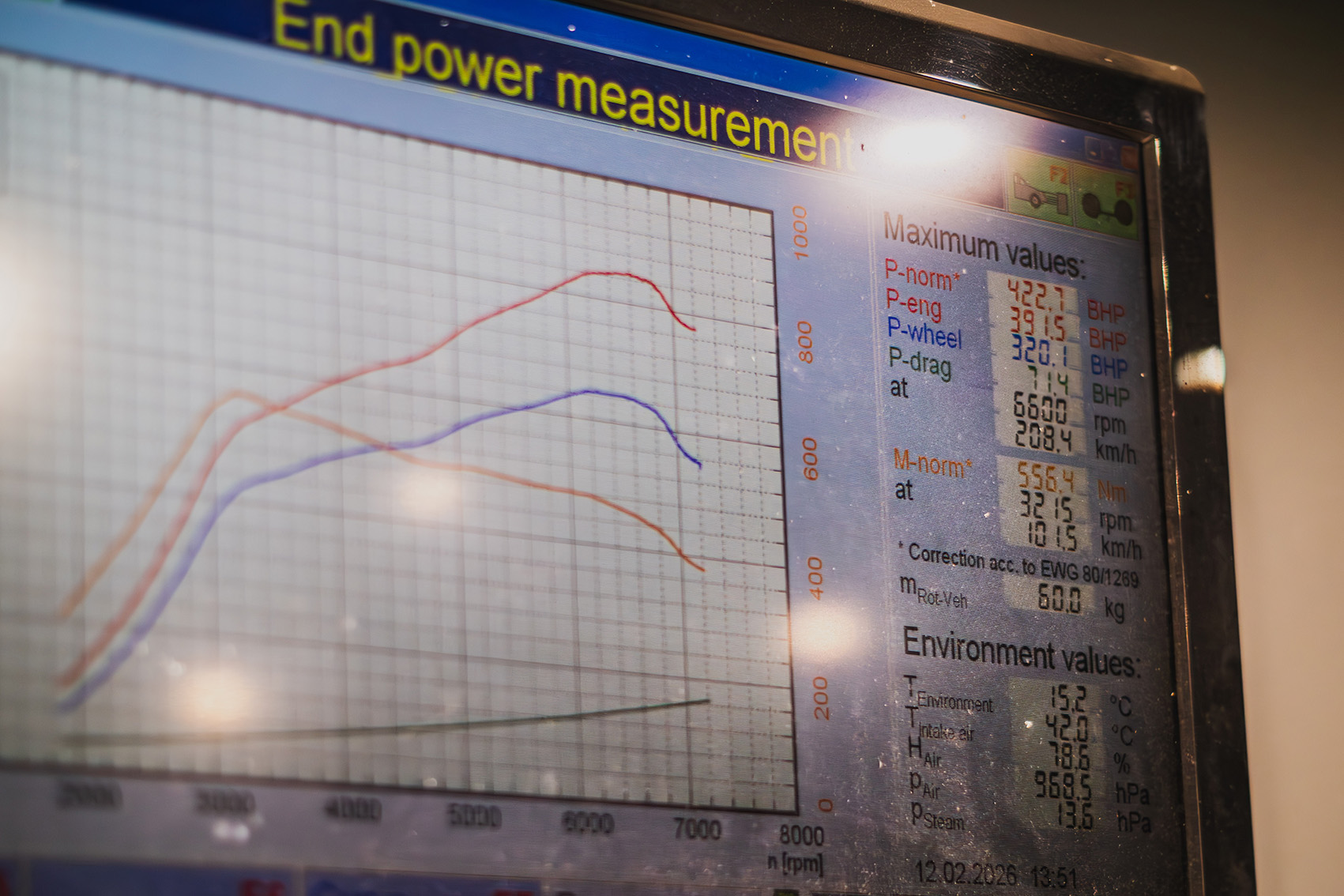
And when you place those figures next to Honda’s original factory rating of 320 PS and 400 Nm, the difference becomes very easy to understand. On paper alone, this build ends up well over 100 horsepower above the factory quoted output and almost 40% higher in torque, which explains why the car now feels so much stronger everywhere in the rev range.
What is just as important as the final peak number, however, is the shape of the curve.
Instead of feeling like a car that gives you one strong hit and then starts fading away, the tuned setup carries its power much more convincingly through the mid-range and into the upper part of the rev range. The torque comes in harder, the turbo holds boost more consistently, and the overall curve feels much fuller compared to the factory character of the car.
That is what really changes the driving experience.
Throttle response is sharper, mid-range acceleration is much stronger, and the way the engine keeps pulling under load gives the FK8 a completely different sense of urgency. This is exactly the kind of result you want from a proper Stage 1 package. Not just a better peak number, but a noticeably stronger and more usable powerband.
Because in the end, dyno results are not only about showing a headline figure. They are there to confirm that the intake, exhaust, cooling system and ECU calibration are all working together the way they should.
And in this case, the graph tells exactly that story.
Final Thoughts

From the beginning, the goal was to follow a clear Stage 1 philosophy. Improve the areas that matter most, support the platform where it needs it, and create a setup that works as a complete package rather than chasing a single headline number.
With the car now properly tuned and supported, the real test moves away from the dyno and onto the track, where temperatures, consistency and driver confidence matter far more than a peak figure on paper.
Because in the end, that is what this build is really about.
Not just making the FK8 faster, but making it better prepared for the kind of use that actually defines it.
Watch the Full Build Video
YouTube video: https://youtu.be/kVa8py7HtIM
