




SRS 4-2-1 Exhaust Manifold – Honda Civic EP3/Integra DC5 Type-R (HPH-CV01EP3)
Product Overview
The legendary K20A and K20A2 engines rely on high volumetric efficiency to make power, but the heavy factory cast-iron exhaust manifold severely chokes this flow. With tight, uneven runners and a restrictive standard catalytic converter assembly, the OEM setup creates immense exhaust backpressure, causing thermal buildup and dragging down overall performance precisely where the engine should be breathing freely.
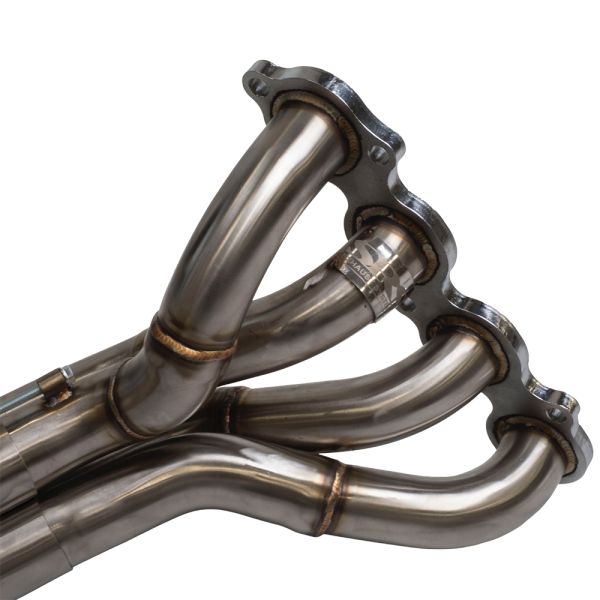
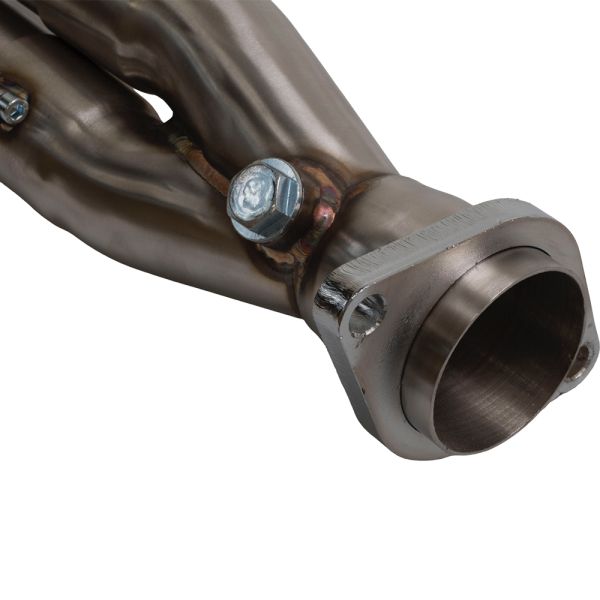
The SRS 4-2-1 Exhaust Manifold – Honda Civic EP3/Integra DC5 Type-R (HPH-CV01EP3) is a CAD-engineered, race-grade tubular header that overhauls your K-series engine’s breathing mechanics. Available at JDMaster.net, this premium exhaust manifold features high-grade T304 stainless steel tubing that replaces both the restrictive factory manifold and the stock catalytic converter. By utilizing an optimized 4-2-1 layout, this race header is tuned to broaden your torque curve and unleash significant dyno-proven horsepower gains—making it the ultimate performance upgrade for track days and spirited street builds alike.
Key Features & Benefits
-
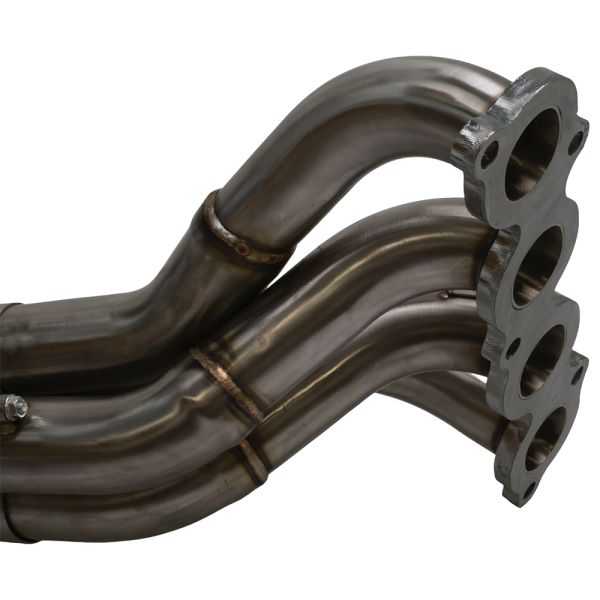
Optimized 4-2-1 Tri-Y Architecture: Engineered specifically to yield substantial torque gains throughout the mid-range while still supporting massive peak power improvements compared to traditional 4-1 headers.
-
Premium T304 Stainless Steel: Constructed entirely from industrial-grade, mirror-polished T304 stainless steel to ensure incredible resilience against extreme exhaust gas temperatures (EGTs) and corrosion.
-
High-Velocity Mandrel Bends: Features 45mm primary branches shaped with continuous mandrel bends to maintain a perfectly uniform wall profile, eliminating performance-robbing internal turbulence.
-
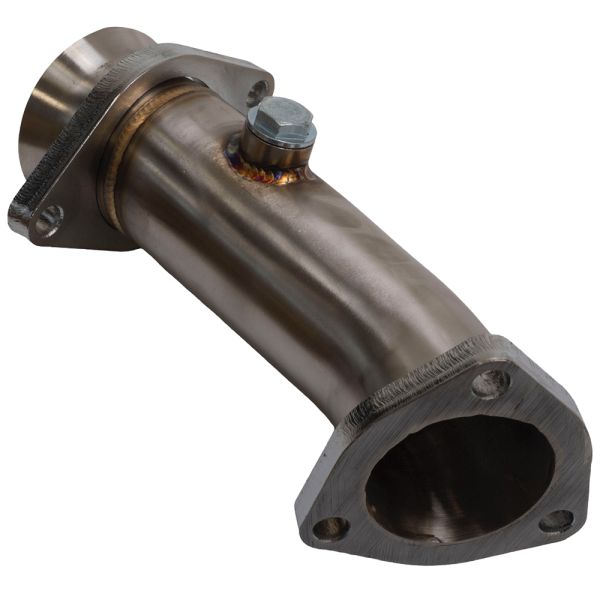
True Straight-Through Decat Race Design: Directly replaces the restrictive factory catalytic converter, sharply reducing backpressure and delivering instantaneous throttle response.
-
Robust 64mm Bore Collector: Merges into a smooth 64mm collector to maximize exhaust gas scavenging velocity and seamlessly integrate with your performance catback system.
-
Precision TIG-Welded Seams: Hand-welded using precise Tungsten Inert Gas (TIG) techniques for flawless, crack-resistant joints capable of handling punishing track vibration.
-
European Sway Bar Clearance: Thoughtfully engineered to provide clean, unhindered clearances around OEM and aftermarket EUDM front anti-roll/sway bars without annoying chassis rattles.
-
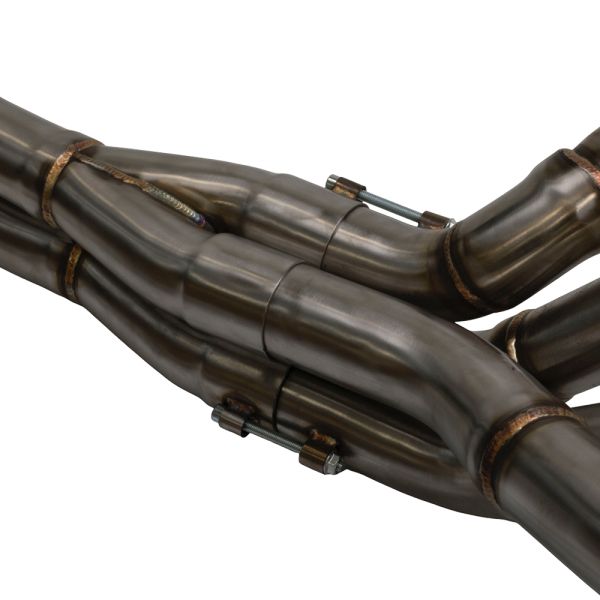
Modular 5-Piece Configuration: Smartly engineered as a multi-piece slip-fit unit, making shipping highly economical and significantly simplifying installation or removal in tight engine bays.
Technical Specifications
| Feature | Specification |
| Brand | SRS Exhaust Systems |
| Part Number / SKU | HPH-CV01EP3 |
| Product Type | Tubular 4-2-1 Race Exhaust Manifold (Header) |
| Primary Runner Diameter | 45 mm |
| Collector Exit Diameter | 64 mm |
| Material Base | Mandrel-Bent T304 Stainless Steel |
| Welding Method | Fully TIG-Welded with Reinforced Flanges |
| Compliance Rating | De-cat Race Specification (Off-Road / Track Use Only) |
| Kit Components | 5-Piece modular header sections, installation bolts, and fresh exhaust gaskets |
Comprehensive Platform Compatibility
This high-flow performance manifold features precision-engineered primary paths and flange positions tailored explicitly for the unique geometry of the hot-hatch and coupe K-swapped engine bays:
-
Honda Civic Type-R 7th Gen (2001–2005 EP3 Chassis with K20A2 / K20A Engines)
-
Honda Integra Type-R / RSX Type-S 4th Gen (2001–2006 DC5 Chassis with K20A / K20A2 / K20Z1 Engines)
The Mechanical Advantage: Lowering VTEC Crossover and Eradicating Torque Dips
On a high-performance naturally aspirated engine like the K20, exhaust design is all about managing pressure waves. When the aggressive VTEC cam profile engages, the engine demands an incredibly fast, unrestricted corridor to scavenge spent exhaust gases from the cylinders. The factory cast-iron assembly forces these pulses to collide into a rough collector and push through dense catalyst honeycombs. This restriction reflects a positive pressure wave back toward the exhaust valves, contaminating the fresh air-fuel intake charge and creating a noticeable dip in torque right before VTEC engagement.
The SRS HPH-CV01EP3 race manifold corrects this design shortfall. Its 4-2-1 structure pairs specific cylinders together first (1 with 4, and 2 with 3) to prevent exhaust pulses from fighting each other. As a high-velocity pulse leaves one cylinder, it creates a powerful low-pressure vacuum behind it that actively sucks out the remaining gases from its paired cylinder.
This scavenging effect lowers backpressure and draws in a cleaner, denser air-fuel mixture into the combustion chamber. By replacing the stock catalytic converter with a smooth, mandrel-bent 60mm exit path, your engine no longer wastes energy pushing against a bottleneck. The result is an immediate, dyno-proven gain of 5 to 15 horsepower depending on tuning, a much broader mid-range torque curve, and a smooth transition into a roaring VTEC crossover.
Professional Lift Installation & Tuning Advice at JDMaster
Get it Fitted by the Specialists: Installing a performance race manifold on an EP3 or DC5 requires removing factory heat shields, wrestling with aged O2 sensors, and aligning a multi-piece slip-joint assembly over subframe components. Because this header removes the primary catalytic converter, it will trigger a Check Engine Light (CEL) for catalyst efficiency on factory ECUs, and absolutely requires a programmable management system (like a Hondata KPro) to safely optimize air-fuel ratios and extract maximum power.
Skip the headaches and schedule an appointment at our JDMaster.net workshop. Our factory-trained motorsport technicians will safely swap your manifold, apply proper anti-seize onto your lambda sensors using specialized spacers if required, ensure perfect leak-free slip-joint seals, and get your chassis fully prepared for your next tuning session.
Related products




Exhaust
